
Incarceration changes the rhythm of communication. Every phone call, letter, or visit becomes more than just an exchange—it becomes a lifeline. And in the midst of routines shaped by time limits and heavy emotions, there is one gesture that often gets overlooked: saying thank you.
Gratitude is powerful. It doesn’t require anything elaborate or poetic. It simply requires you to notice. In a relationship where physical presence has been taken off the table, words of appreciation can ground you both in the emotional reality of why you’re still here, choosing each other.
But what does a gratitude letter look like when you’re writing to someone inside? And how can you express it in a way that feels authentic, not performative?
This post will walk you through tone tips, example language, and writing templates that can help you craft something meaningful—whether you’re sending a full-page letter or a few lines tucked into another note.
Why Gratitude Matters in a Prison Relationship
When your partner is incarcerated, their day-to-day life is often shaped by systems that offer little recognition. There is rarely praise, positive reinforcement, or meaningful acknowledgment inside. Even the smallest kindness—helping someone navigate a new unit, encouraging a cellmate, or showing restraint when tensions rise—can go unnoticed.
Your gratitude may be the only intentional affirmation your loved one receives. And beyond that, it’s a gift to yourself. Naming what you’re thankful for helps you reconnect to purpose. It reminds you why you’re choosing to stand beside this person, even when it’s hard.
Gratitude helps shift the focus from everything that is missing to what is still present, still growing, still possible.
Tone Tips for Gratitude Writing
1. Be specific.
General praise (“Thanks for being great”) can feel vague. Point to something concrete: a recent conversation, a gesture, or a memory they’ve kept alive for you.
2. Stay grounded.
You don’t need to embellish or over-romanticize. The goal isn’t to convince anyone—it’s to reflect truth. Honest and heartfelt always beats flowery and forced.
3. Match their energy.
If your partner is more direct and practical, a short and strong statement may resonate best. If they’re reflective and expressive, a longer letter with metaphor or storytelling may feel more meaningful.
4. Keep your own voice.
It’s tempting to write in the tone of a greeting card, especially when emotions run high. But your partner fell in love with your real voice. Let that voice be what they hear when they read your letter.
Gratitude Letter Prompts
If you’re unsure where to start, here are a few sentence stems that can help you begin:
- “I’ve been thinking about the way you…”
- “One thing I appreciate about you that I don’t say enough is…”
- “Even from where you are, you still find a way to…”
- “Your words/letters/actions remind me that…”
- “Thank you for always showing up emotionally, even when…”
- “What you said last time has stayed with me. It made me feel…”
A Simple Template for a Full Gratitude Letter
You can adapt this structure based on your writing style and relationship:
Dear [Name],
I’ve been reflecting on how much you’ve shown up for me, even from where you are. I know this journey hasn’t been easy, but your presence in my life makes a difference. And today, I want to focus on something simple but important: saying thank you.
Thank you for [insert specific action, trait, or moment—example: “encouraging me when I was overwhelmed with work last week” or “reminding me who I am when I doubt myself”].
Your strength helps me find mine. Your ability to love from a distance has taught me more about real commitment than anything I’ve ever experienced. I see how you keep trying, how you stay present through letters, calls, and everything else. That effort means the world to me.
Even though we’re apart, I carry your support with me every day. And I want you to know—I don’t take that for granted.
With all my love and deep appreciation,
[Your Name]
Including Gratitude in Everyday Notes
Not every thank you has to be a full letter. You can include small expressions of appreciation in your regular correspondence, like:
- “I smiled re-reading your last letter. Thank you for always finding ways to lift my mood.”
- “You’ve been so patient with everything I’ve had going on. That doesn’t go unnoticed.”
- “You reminded me who I am when I needed it most. I’m grateful for your voice.”
These small statements, written consistently, help build a foundation of mutual respect and emotional care.
A Tool to Go Deeper
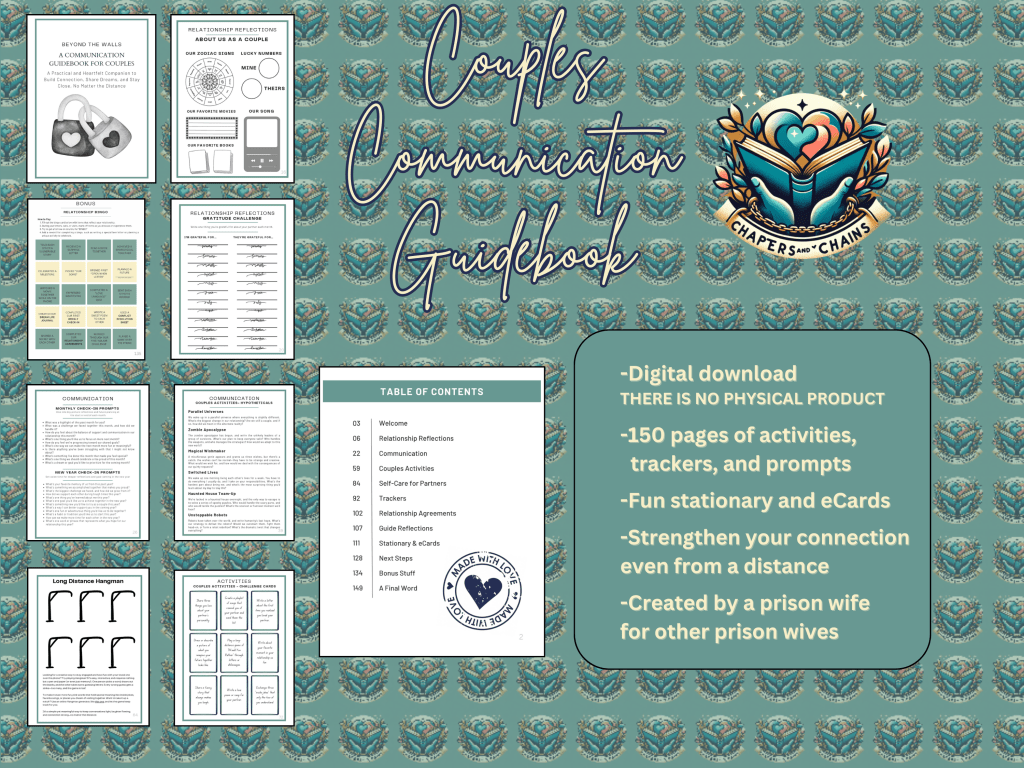
If you’re looking for more ways to build emotional connection and share heartfelt messages, the Couples Communication Guidebook was created specifically for couples navigating incarceration. Inside, you’ll find:
- Prompts for appreciation, future planning, and conflict repair
- Letter-writing exercises and tone suggestions
- Pages for shared affirmations and gratitude tracking
- Conversation guides to help you reconnect when the distance feels overwhelming
It’s been used by couples across DOC systems as a way to keep communication healthy, consistent, and emotionally rich.
Final Thought
Gratitude is not about ignoring the hard parts. It’s about honoring the small things that keep you both going. In a world that often makes love feel transactional or conditional, saying thank you becomes a quiet rebellion. A way of saying: I see you, I value you, and I’m still here.
Your letter might only take five minutes to write, but it could carry your partner through a week.
So take a breath. Pick up your pen. Let them know they matter—still, always, and especially now.



Leave a Reply