
They’re Selling Your Family False Hope (And Using AI to Do It Faster)
What predatory parole packet companies don’t want you to know, from someone who builds AI tools for a living
If you’ve spent any time in Texas incarceration Facebook groups, you’ve seen the ads. “Professional parole packet services.” “Increase your loved one’s chances.” “Let the experts handle it.“
And the prices. Up to $1,599. Rush delivery add-ons. Attorney phone calls for an extra $1,999 — requiring pre-approval and purchase of a higher-tier package first. I want to talk about what you’re actually buying. Because I build AI tools professionally, and I can see exactly what’s happening here.
First, the thing the Texas BPP will tell you for free. Before we go any further, let me quote the Texas Board of Pardons and Paroles directly, from their own website:
“The offender does not need to make, nor have made, a ‘parole packet’ to obtain a favorable board vote.“
Read that again. The body that decides whether your loved one comes home says — in writing — that a parole packet is not required. It is not mandatory. It does not guarantee anything.
A well-prepared packet can help. It demonstrates initiative. It gives board members something to reference. But it is one input among many, and the board has been reviewing these documents for decades. They know the difference between something real and something manufactured.
So what are these companies actually selling?
A parole packet has a few core components: a cover letter, a personal statement, letters of support, program certificates, a disciplinary record if applicable, and a reentry plan covering housing, employment, and primary contact.
That’s it. A structured collection of information your family already has.
What these services are charging hundreds (sometimes over a thousand) dollars for is formatting. A template. Boilerplate language dressed up to look professional.
Here’s how I know. I build AI systems for a living I work on clinical protocol engineering for a healthcare company and use tools like Claude and ChatGPT daily in my professional work. I know exactly what these outputs look like, and I know what they cost to produce: almost nothing.
A generic parole cover letter takes about 45 seconds to generate. A boilerplate reentry plan takes another 30. Drop in a name and a TDCJ number, export to PDF, charge $1,599.
That’s not a service. That’s a mail merge with a markup.
The two faces of this industry
The predatory parole packet industry has two models, and you should know how to spot both.
The first is the premium service. A quick search for “Texas parole packet service” will surface companies charging up to $1,599 for a packet — payable in installments — with add-ons: $499 for 72-hour rush delivery, and $1,999 for an attorney to make a phone call to a parole board officer, a call that requires pre-approval and purchase of a higher-tier package first. They present as professional, credentialed, comprehensive. What you’re buying is a formatted Word document and AI-generated language your family could produce in an afternoon. (Pricing verified via direct review of service provider websites, April 2026.)
The second is the free funnel. You’ve probably seen these in Facebook groups — a free masterclass, an opt-in form, someone with lived experience as the face. That credibility is real, and it matters. But somewhere between the free landing page and the actual course content, you find yourself paying for material that was generated by ChatGPT. The authentic voice that drew you in isn’t what built the product.
Both models are selling the same thing: the appearance of expertise, wrapped around AI output, targeted at families who are frightened and running out of time before a review date.
What AI actually can’t do
Here’s what nobody selling these services will tell you: the parts of a parole packet that actually matter are exactly the parts AI cannot write.
A parole board member reviews hundreds of packets. They have read thousands of cover letters that say the applicant has “demonstrated significant personal growth and is committed to becoming a productive member of society.” That sentence is everywhere. It means nothing. It is, in fact, a signal, that someone generated this document rather than lived it.
What lands is specific. The reentry plan needs a real address. A real employer or program. A real person’s name and phone number who has agreed to be the primary contact. AI can format that information. It cannot create it.
The personal statement needs to sound like the person who wrote it — their voice, their specific offense, their specific journey. A parole board that sees the same AI-generated phrasing across multiple packets from the same service isn’t just unimpressed. They’re now skeptical of everything in that packet.
Support letters need to come from people who actually know your loved one — with specific details, specific memories, specific commitments. Quality over quantity. One letter from someone who can speak to exactly who this person is today is worth more than ten templated character references.
AI didn’t write any of those things for your family. Neither did a company in another state that received a form and a payment.
What you can do instead — and what it actually costs
The Texas BPP’s own website says a packet is not required for a favorable vote. That sentence should be the first thing every advocacy group puts in front of every new family.
If you want to build one (and there are good reasons to) real resources exist that won’t drain your account. Texas Defender Service (texasdefender .org/parole) offers completely free guides, checklists, a reentry planning worksheet, and a support letter guide, all developed with input from people who have actually been through the Texas parole system.
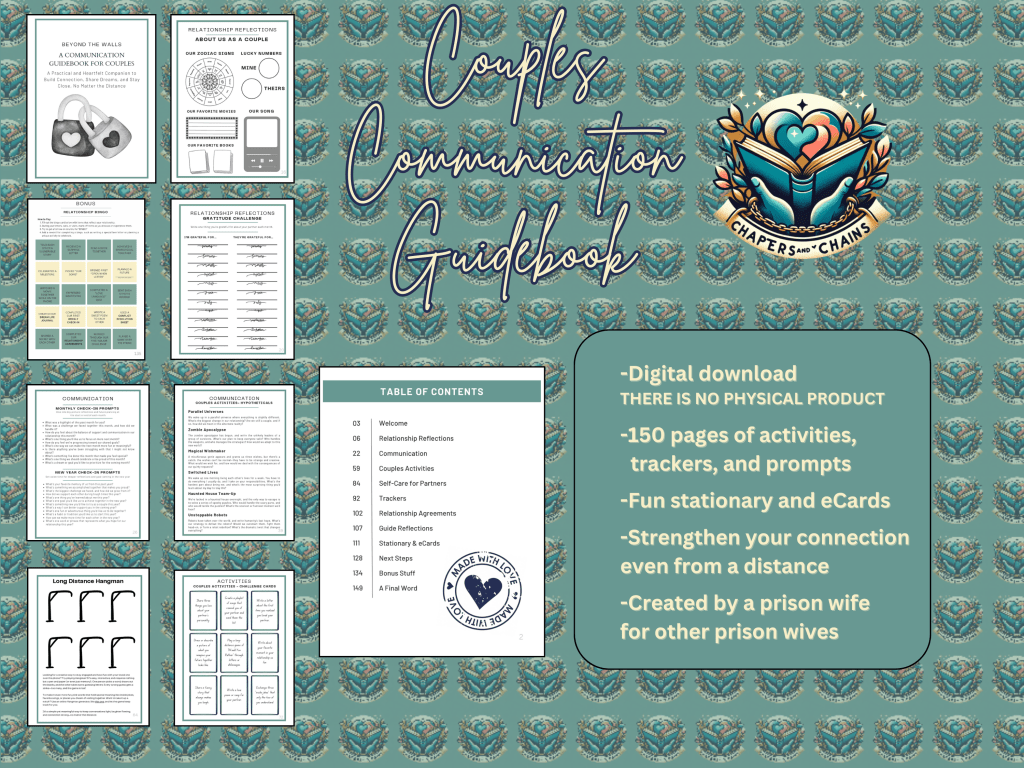
If you want structured templates you can fill in and keep, I offer a step-by-step parole packet guide and a reentry planning worksheets bundle through my Etsy shop for $3–$5 each — every document developed from real experience navigating this process, not generated by an algorithm. They will never increase in price, and honestly I give them out for free more than not.
The difference between a $3 template built by someone living this and a $1,599 “premium package” built by a company running your loved one’s name through ChatGPT is not quality. It’s who gets to profit from your desperation.
Why I’m writing this
I’m a data scientist. I build AI tools professionally. I’m also a woman whose husband is incarcerated in Texas, and I have sat in the same Facebook groups you’re in, watching the same ads scroll past.
I know what these products cost to make. I know what they actually are. And I know that the families buying them are spending money they don’t have, on a review date that already feels impossible, because someone made them feel like a professional document was the thing standing between their loved one and home.
It isn’t. Your authentic effort — even imperfect, even handwritten — is worth more than anything these companies are selling.
Save your money. Build it yourself. I’ll show you how.
Addie is a data scientist and criminal justice advocate. She is the communications lead for Texas Prisons Alliance and PACT, and writes at Chapters and Chains about life, love, and the long road home. Her free and low-cost parole packet resources are available at chaptersandchains.com.



Leave a Reply